
What is HTAP?
What if saving a piece of Trinidad and Tobago’s history could also strengthen your business, your community, and your national pride?
Our heritage lives not just in our music, cuisine, or Carnival—but in the walls of our old cocoa houses, the columns of our colonial-era storefronts, and the steps of temples, mosques, churches, and homes that have quietly shaped our national identity. These spaces carry our stories but without active protection, these cultural assets will quietly disappear.
The Heritage Tax Allowance Programme (HTAP) changes that. This government-led initiative offers substantial financial incentives to preserve the cultural and architectural treasures of Trinidad and Tobago. Through HTAP, registered businesses can claim up to 150% of expenditure incurred on approved heritage preservation projects—making conservation not just an act of national pride, but a smart business decision.
More than just tax relief, HTAP creates partnerships between private enterprise, heritage asset owners, and the National Trust of Trinidad and Tobago —ensuring that preservation becomes accessible, achievable, and impactful for all. Whether it’s a historic home, a religious site, or a landmark building, HTAP opens the door for meaningful restoration backed by national purpose.
With the programme now officially underway, the time to get involved is now. Whether you’re a business seeking a meaningful CSR initiative, or a property owner looking to restore and revive your legacy, HTAP offers a pathway to do something extraordinary: protect what makes us truly unique, and help write the next chapter of our nation’s story.
Key Benefits for Businesses and Heritage Owners
Businesses: Build Brand Value While Restoring National Value
Whether you’re a large corporation or an SME, supporting a heritage site through HTAP gives you more than just tax relief—it gives you a chance to stand for something meaningful.
- Tax Incentives That Go Further
Businesses can claim up to 150% of approved restoration expenses as a tax allowance, offering a strategic return on cultural investment. - Corporate Social Responsibility with Depth
Align your company with national heritage, sustainability, and social impact in a way that resonates with your customers and stakeholders. - Public Perception
This is enhanced as Supporting cultural preservation builds long-term goodwill with communities, government, and future customers—because people remember who showed up for their country.
Heritage Property Owners: Restoration Support That Makes a Difference
Owning a piece of history is an honour—but it can also come with overwhelming responsibility. HTAP lightens the load by connecting property owners with resources, funding, and expertise.
- Access to Business Sponsorship
Property owners can receive financial support for eligible restoration work through partnerships with registered HTAP sponsors. - Expert Guidance from the National Trust
From project planning to conservation best practices, you won’t be doing this alone. The National Trust is here to guide you every step of the way. - Increase in Property and Cultural Value
Restored heritage properties not only rise in monetary value but also attract local and international interest, including educational tours, tourism, and community pride.
Who is Eligible?
HTAP is open to legally registered businesses in Trinidad and Tobago that are tax-compliant and willing to sponsor or support restoration work through direct funding or approved services.
Heritage property owners may qualify if they manage a building or site listed on the National Heritage Register—and if not yet listed, they can work with the National Trust to begin the nomination process.
Eligible projects include structural repairs, roof and façade restorations, electrical and plumbing upgrades, fire safety improvements, and the preservation of authentic architectural features and much more!.
HTAP’s First Project
The Tunapuna Old Post Office is first project to be endorsed under the Heritage Tax Allowance Programme. The Oral Tradition ROOTS Foundation application for the Tunapuna Old Post Office was submitted for an “Adaptive Re-use Project.” This heritage asset is located at GEZ 38 Railway Road which bounds the Priority Bus Route and sits between the Bus Terminal (East) and the Export Centre Company Limited (West).
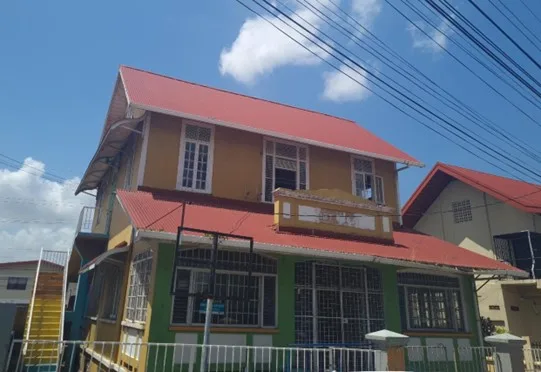
The Oral Tradition ROOTS Foundation plans to transform the Old Post Office into a learning and entertainment space called “ROOTS CAFÈTT” – Creative Academy for EduTainmenT which would prioritise the preservation of the asset’s social, cultural and architectural heritage while adapting it for temporary educational and community-focused purposes.
Restoration efforts commenced in 2024 with the goal of retaining the existing rooms such as the kitchen and washrooms in addition to some having new functions to accommodate the objectives of the program. With Roots Foundation’s submission of their application in 2025, members of HTAP visited the site for an assessment of the building. The foundation reached out to various businesses for quotes on the project at hand and many were eager to supply them with the estimates for the work that needs to be done. There is substantial work that needs to be completed and actions such as repairs, replacements and removals of materials and structural works will need to be executed for ROOTS Foundation to achieve their goal of creating this centre for learning and entertainment. Businesses are welcome to contact the Roots Foundation to sponsor or donate towards this ongoing project.

How to Apply
Taking the first step toward preserving our national heritage is easier than you think. Whether you’re a business interested in sponsoring a restoration or a heritage property owner ready to begin your conservation journey, the National Trust of Trinidad and Tobago is here to support you. To explore the full application process, including eligibility criteria, downloadable forms, and submission steps, simply visit the portal at htap.nationaltrust.tt. This dedicated page walks you through everything you need to know—from identifying a property to submitting your proposal. Your commitment today could help protect a legacy for generations to come.